
Root Canal Treatment
Relieve pain and save your natural tooth
A root canal treatment, also known as endodontic treatment, is a common dental procedure used to treat an infected or severely damaged tooth while avoiding extraction. At Clinique dentaire Saba, this treatment is designed to eliminate pain, stop infection, and preserve your natural tooth for as long as possible.

What Is a Root Canal Treatment?
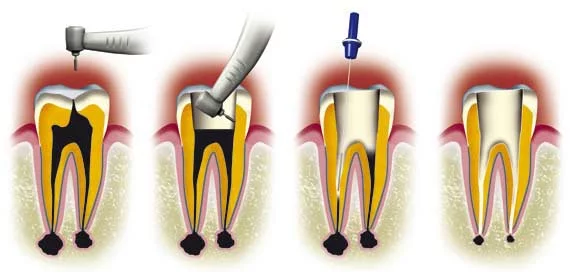
A root canal treatment involves removing the infected or inflamed dental pulp located inside the tooth. This pulp contains nerves and blood vessels that, when affected by deep decay, cracks, or trauma, can cause severe pain and infection.
Once the pulp is removed, the canal is cleaned, disinfected, and sealed to prevent reinfection.
Why Is a Root Canal Treatment Necessary?
A root canal is recommended when the dental pulp is irreversibly damaged. Common causes include:
- Deep tooth decay
- Dental infection or abscess
- Cracked or fractured tooth
- Trauma that has damaged the nerve
- Persistent or throbbing pain
Without treatment, the infection can spread and lead to more serious complications, including tooth loss.

Symptoms That May Indicate the Need for a Root Canal
Certain signs should prompt you to seek care promptly:
- Severe or prolonged tooth pain
- Significant sensitivity to hot or cold
- Pain when chewing
- Swelling of the gums or face
- Tooth discoloration
- Presence of an abscess
Root Canal Procedure
A root canal treatment is usually completed in one or two visits, depending on the complexity of the case:
- Clinical examination and X-rays
- Local anesthesia to ensure your comfort
- Removal of the infected pulp
- Cleaning and disinfecting the canals
- Filling and sealing the canal
- Restoration of the tooth (filling or crown, if needed)
Thanks to modern techniques, root canal treatment is now a comfortable and highly effective procedure.
After a Root Canal: What to Expect
It is normal to experience mild sensitivity for a few days after treatment. This sensitivity usually fades over time. Good oral hygiene and follow-up visits help ensure long-term success.
In some cases, placing a crown is recommended to strengthen the treated tooth and prevent fractures.
Frequently Asked Questions About Root Canal Treatment
Is a root canal painful?
No. The procedure is performed under local anesthesia and is specifically intended to eliminate the pain caused by infection.
How long does a root canal treatment take?
The duration varies depending on the tooth and the complexity of the infection, but it is typically completed in one or two visits.
Is it possible to avoid a root canal?
Early diagnosis and prompt treatment of cavities can sometimes prevent the need for a root canal. Once the pulp is affected, this treatment becomes necessary.
Can a treated tooth last a long time?
Yes. With proper restoration and good oral hygiene, a tooth that has undergone a root canal can last for many years.